If you have plantar fascia pain — you’re in the right place.
We'll show you why your pain hasn’t improved & what to do about it.
This is the same explanation Physio Matt gives his patients in clinic.
There's a reason your pain keeps coming back — you need to understand why so you know how to fix it.
If you’ve been doing everything you’ve been told — and still aren’t better — this video explains why. Skipping this explanation is exactly why most people stay stuck. They jump straight to "fixes" without understanding what they’re trying to fix. By the end of this video, you’ll understand:
- Why your plantar fascia pain hasn’t settled like other injuries
- Why temporary relief ≠ healing
- Why stretching, rolling, and insoles often fail long-term
- Why treating symptoms without understanding the tissue keeps you trapped in cycles of flare-ups
If you feel like heel pain is slowly taking over your life, you are not alone. 1 in 11 people suffer from plantar fascia pain. It is debilitating. It changes how you walk, stops you from exercising, and makes even the simple act of getting out of bed a miserable experience.
The plantar fascia is a thick band of tissue that tensions the arch between the heel bone (calcaneus) and base of your toes (metatarsals). It's made of tightly-packed bundles (like a rope) of collagen fibres (protein structures). It is designed to be tough and act as a shock absorber.
However, if the tissue loses its load capacity, it creates alarm signals (pain) in the tissue due to overload the moment you try to do "too much".
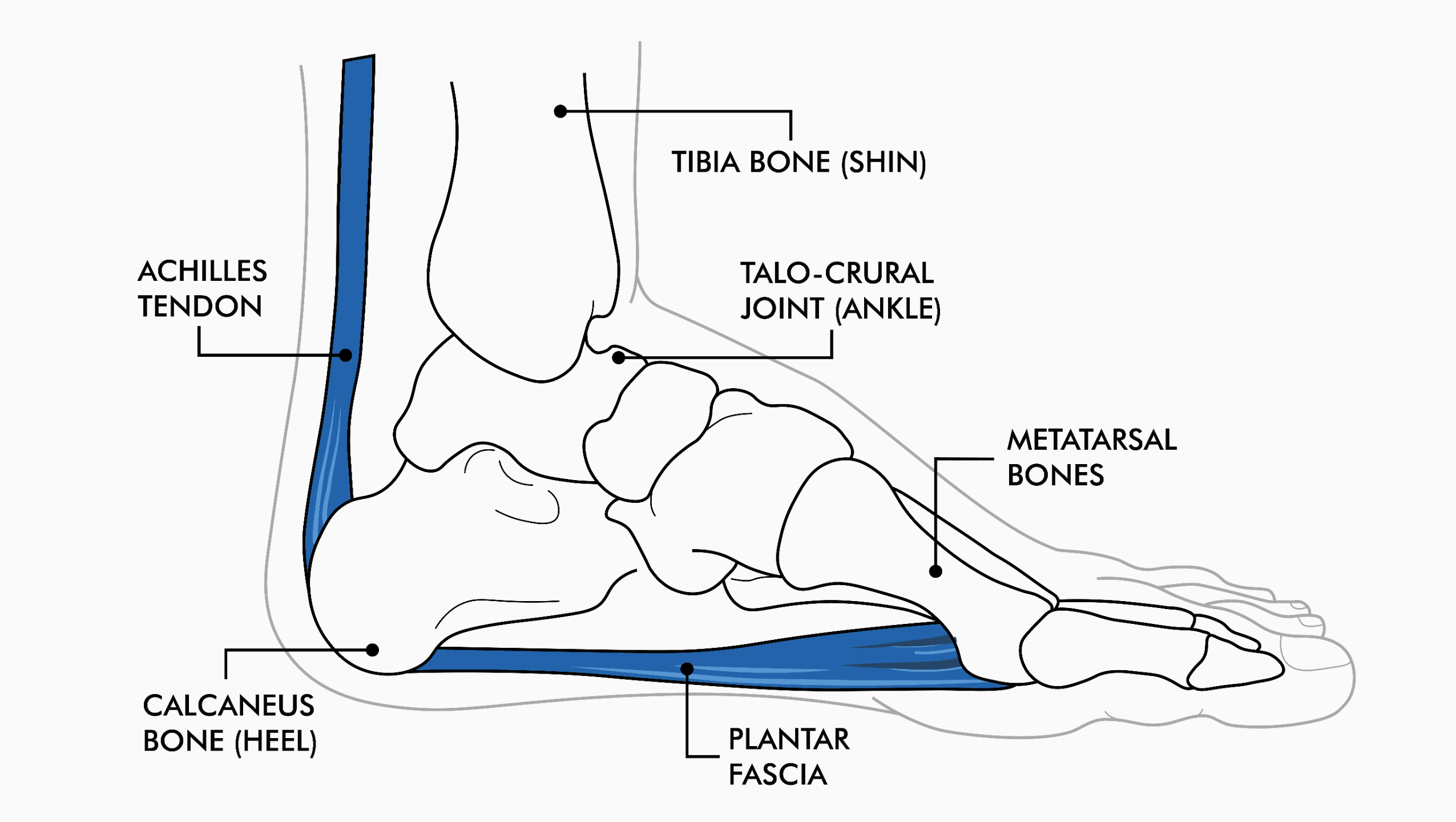
The problem usually starts with the diagnosis itself. Most people with heel pain are told they have "Plantar Fasciitis". The suffix -itis implies acute inflammation. If it were truly just inflammation, a few weeks of rest and some ice would fix it.
But when pain persists for more than a month, the research now shows us that the tissue has actually changed. It transitions into "Plantar Fasciopathy". This isn't just inflammation anymore; it is cellular degeneration. Sounds scary! But, the collagen fibres within the plantar fascia have become disorganised and weakened with micro-tears. And the good news is that it's completely reversible under the correct conditions.
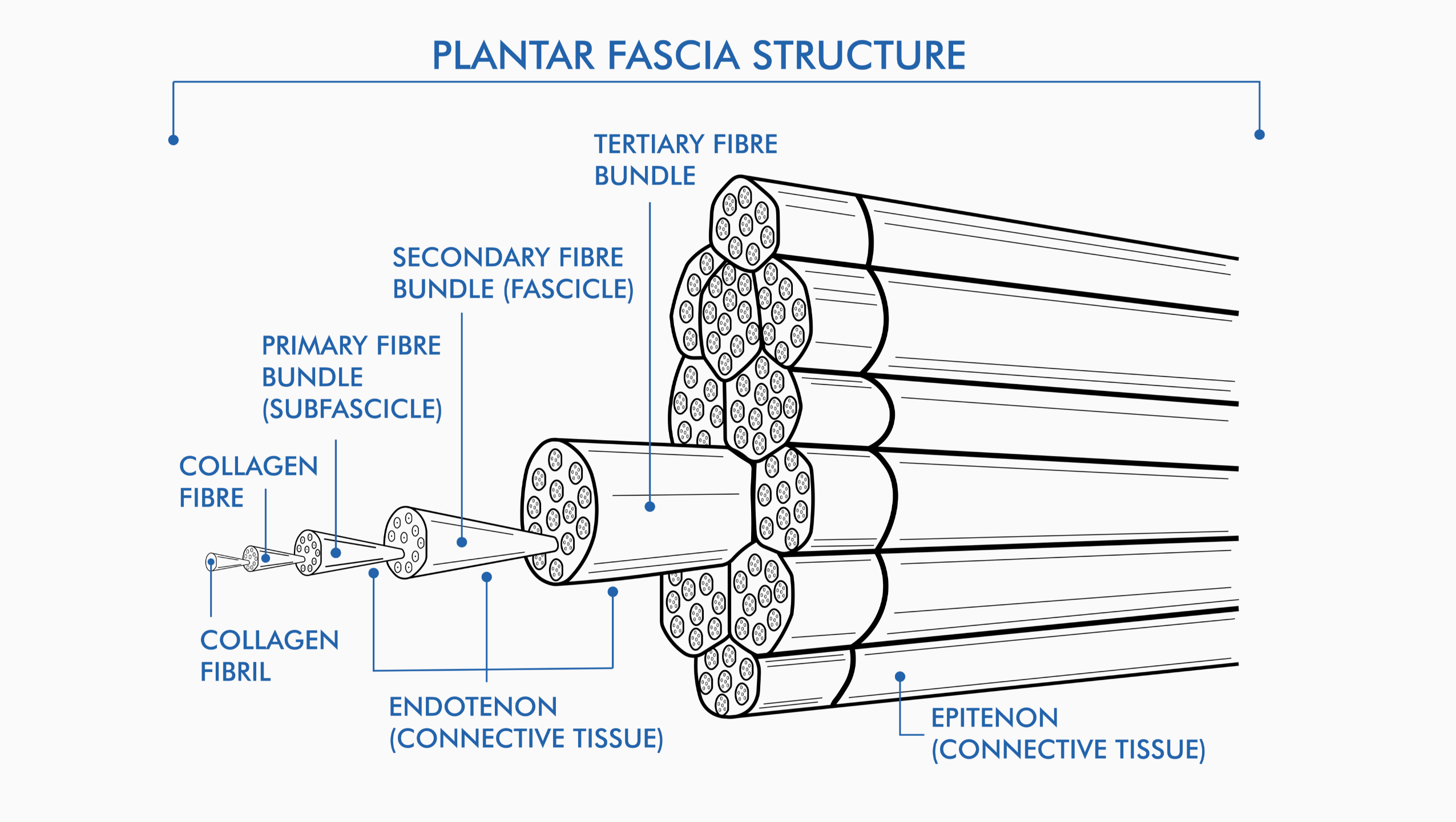
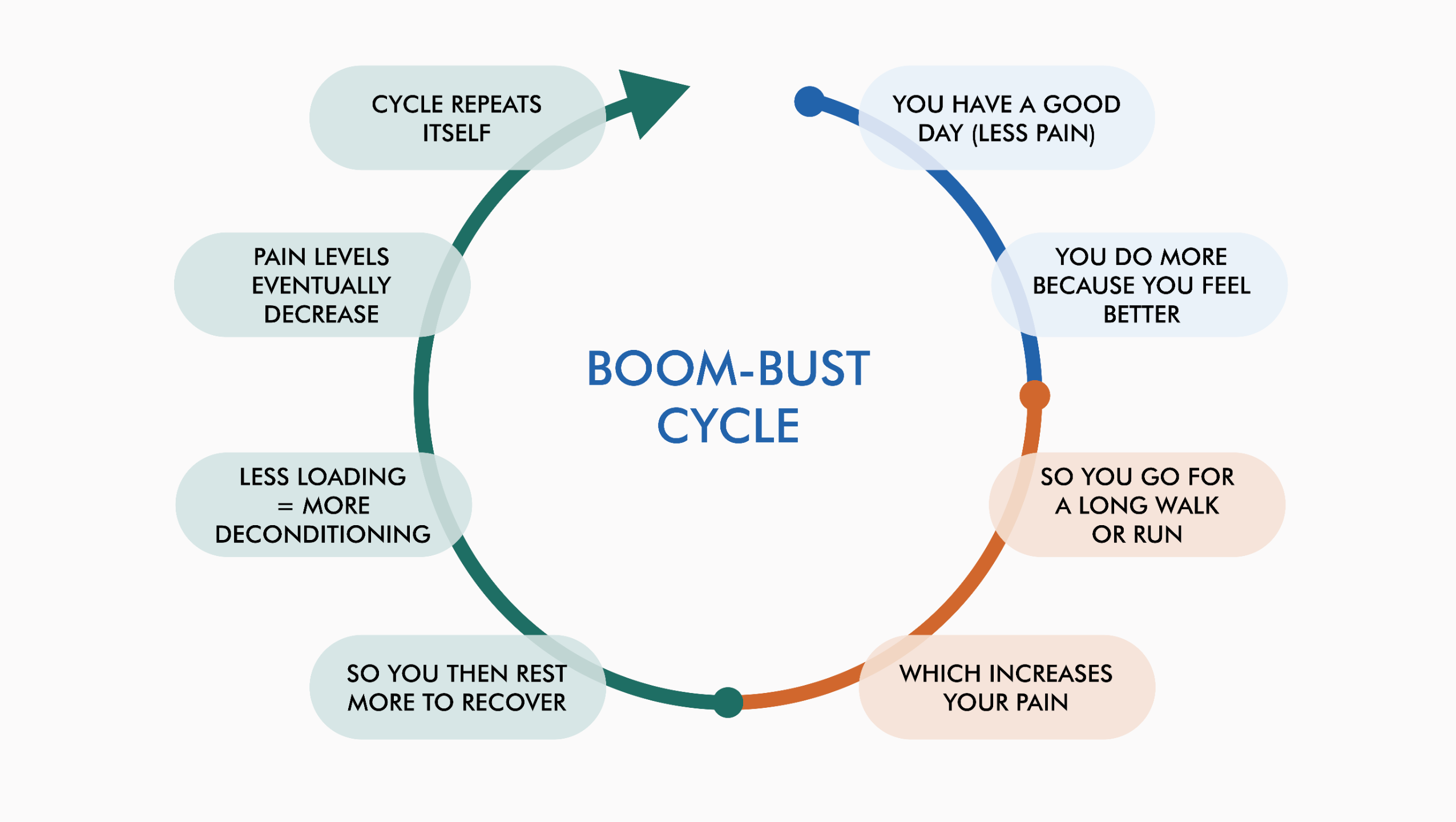
The misdiagnosis trap is why the standard advice has failed you. You cannot rest, stretch, or massage your way out of cellular degeneration. Without a structured plan, most people fall straight into the Boom-Bust Cycle.
You rest until the pain fades, assume you're healed, and go for a long walk or a run (the Boom). Because the tissue is still weak, it overloads immediately, triggering a flare-up that forces you back to rest (the Bust).
Breaking this cycle relies on collagen regeneration. This requires consistent and progressive loading, structured rehab... and time (approximately 8 weeks). Doing a random combination of exercises and treatments and hoping something sticks, isn't enough. To heal, you must stop prioritising passive, symptom-masking treatments, and start actively rebuilding the tissue's capacity with a systematic approach. This must be applied methodically and must progress with you, over-time.
This is the proven system Physio Matt uses to permanently fix plantar fascia pain.
Introducing you to the RecoveryPyramid™ — which shows you what you need to prioritise for your recovery.
Now you understand why your pain hasn’t settled, the next question is: What should you actually do about it? In this next video I’ll walk you through the RecoveryPyramid™ — the exact framework used in clinic — to answer what matters most, what matters least, and what needs to happen first. You'll learn:
- The RecoveryPyramid™: Research-driven order of priority
- Why sequence matters more than motivation
- How to rebuild load tolerance safely without flare-ups
- How I've turned complex clinical research into a simple, 5-10 minute daily routine
The RecoveryPyramid™ is our systematic framework built upon world-leading research that shows you exactly what matters most when fixing plantar fascia pain. It separates the strategies that calm symptoms from the strategies that actually rebuild the foot’s load capacity.
Most people treat plantar fascia pain from the top down (neuromodulation & extrinsic aids): Stretching, massage, insoles, footwear, gadgets, or passive treatments. This neglects the foundations that actually drive long-term recovery. The RecoveryPyramid™ shows the hierarchy to ensure you're prioritising the right things, in the right order: calming symptoms and managing daily load to ensure you rebuild your tolerance so you can return to activity. This forms the foundations of the PlantarFasciaFix™. Read the research behind it.
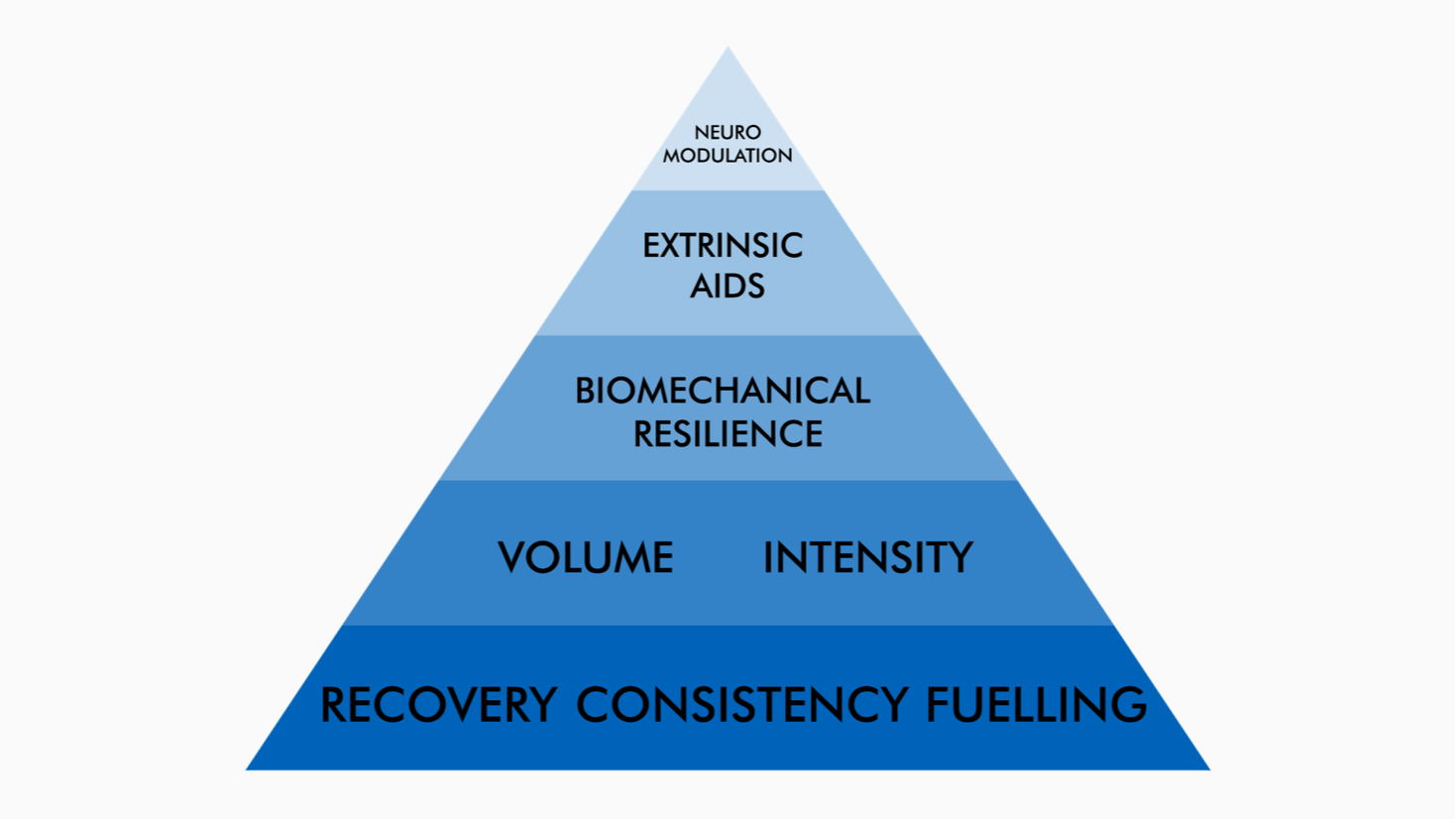
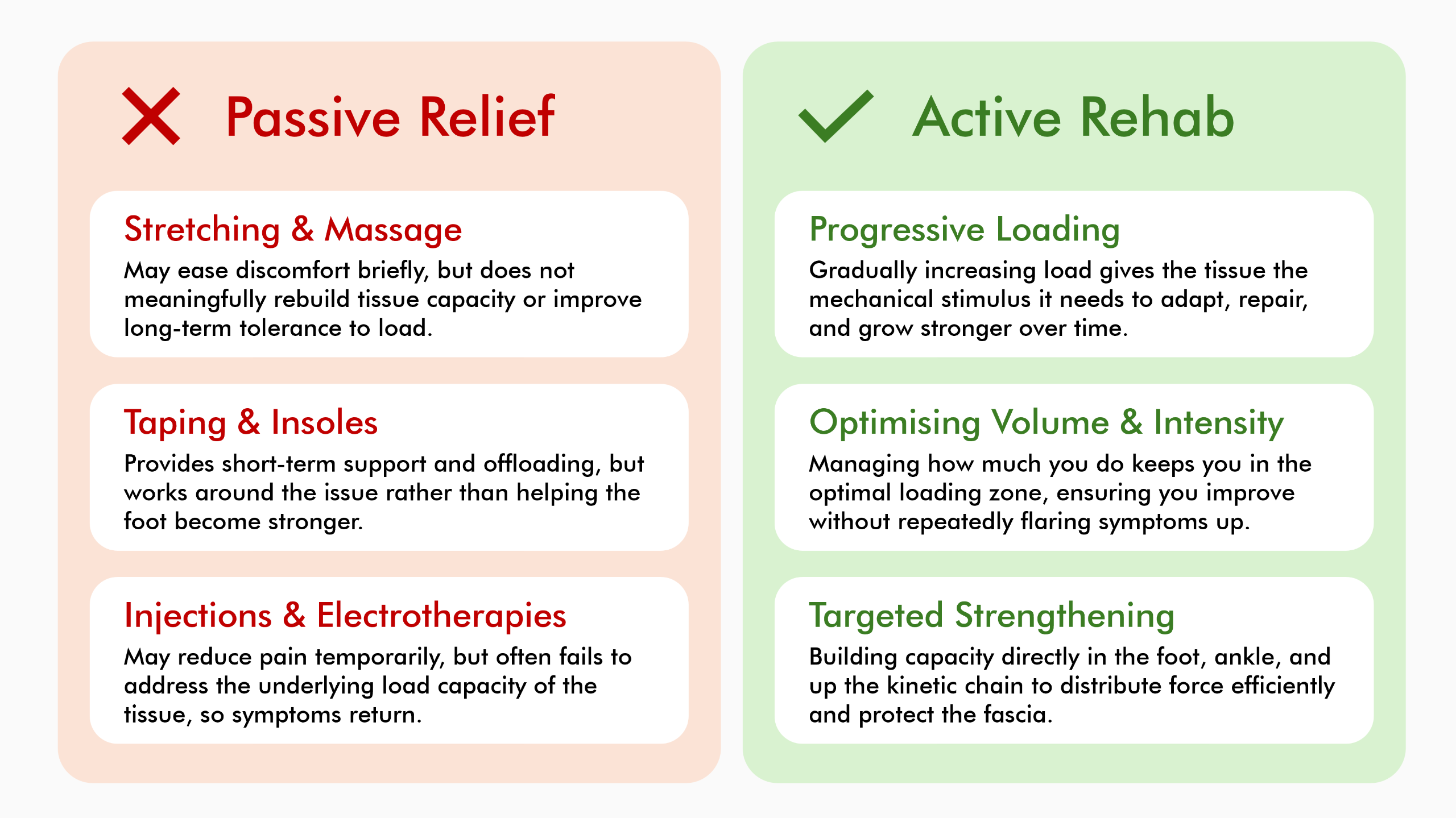
If you’ve searched online for heel pain fixes, you’ll see: stretch it, massage it, roll it on a ball, ice it, tape it, or buy new insoles. These can provide temporary relief. But relief isn’t the same as lasting recovery.
They don’t make your plantar fascia stronger. They don’t trigger collagen repair. They don’t rebuild resilience. This is why you're still struggling with your symptoms.
When you actively and progressively load the plantar fascia, the collagen remodels, gets stronger, and restores your foot’s ability to handle daily activity without pain. This is what you need to do: bring together all the elements that create repair & resilience.
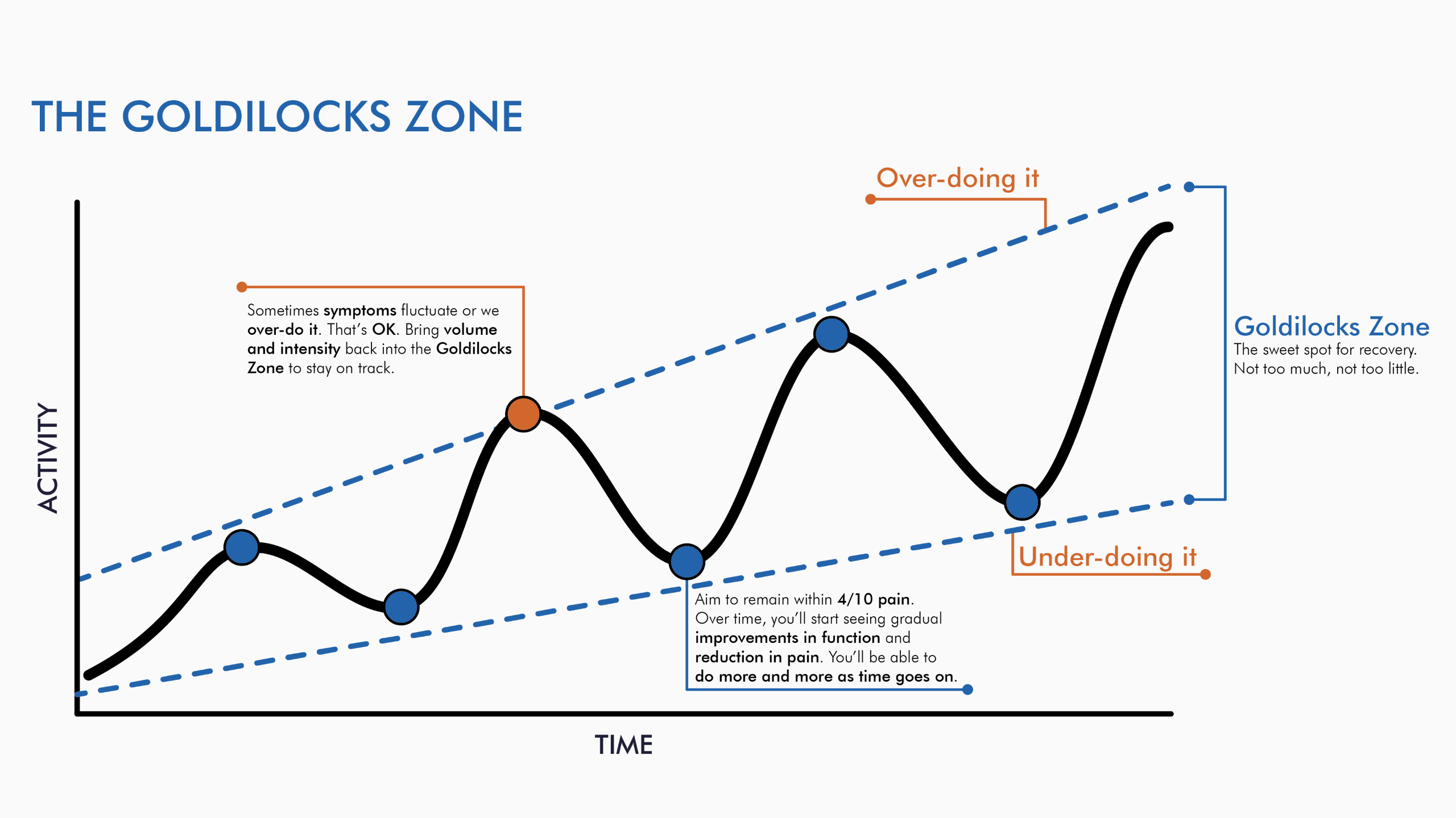
If your heel pain keeps flaring up, it’s usually because your foot is being asked to do more than it can currently tolerate. Too much load and the tissue gets irritated. Too little load and nothing adapts.
That’s why managing your volume and intensity matters so much. Volume is how much you’re doing overall: steps, standing, walking, work, training. Intensity is how demanding that load is: gentle walking is very different from hills, power walking, running, or jumping.
The GoldilocksZone™ is the sweet spot in the middle. You’re doing enough to stimulate repair and rebuild tolerance, but not so much that you keep setting yourself back.
The PlantarFasciaFix™ is your step-by-step path back to normal.
This system has been turned into an 8-week roadmap that guides you back to living pain-free and doing the activities you love.
You are here
If you’re reading this, it probably feels like this:
- Your foot feels worse after being on it - but resting doesn’t fix it.
- You’re constantly second guessing whether you’re doing too much or too little.
- Some days it feels better… then suddenly it flares again.
- You’ve tried loads of different things, but nothing seems to stick.
- You’re losing confidence in your body. You feel trapped by your pain.
- Let us guide you to relief.
Understand your starting point
Stop guessing what’s going on. Start understanding what the root cause is by watching the videos on this page.
You’ll learn what’s actually driving your symptoms and identify your current load tolerance - so you know exactly where you are and what your foot can handle.
Get clear guidance
No more second-guessing your activity.
Using the Goldilocks Zone™, you’ll learn how to listen to your body so you can stay active without pushing into flare-ups - and how to get more out of what you’re already doing.
Rebuild strength & capacity
This is where real change happens. No more random exercises.
You’ll follow a progressive strengthening plan targeting the plantar fascia and overall biomechanics - building resilience with just 5–10 minutes a day.
Not only that, but you'll be guided with our toolkits and guides so you can focus on all aspects of recovery.
Return to activity safely
Walking more. Being on your feet longer. Running again.
All without worrying about your foot holding you back. You’ll follow clear progression rules so you can build back safely without the boom–bust cycle.
Plus, you'll know exactly how to manage your flare-up if it happens.
Stay pain-free long-term
Recovery doesn’t stop at “feels better”.
You’ll know how to maintain your progress, prevent flare-ups, and keep your foot strong — so you’re not back at square one in a few months.
Where this takes you
With the right guidance and structure, you will:
- Understand exactly why you have your pain, and stop feeling controlled by it.
- Know how much load your foot can handle, and how to get the most out of it.
- Follow a clear daily plan that progresses each week.
- Experience fewer flare-ups, and when they happen, they no longer set you back to the start.
- Start to trust your body again.